
Generalization in ABA Therapy: Strategies for Success
- Consultants for Children, Inc

- Jul 25, 2024
- 4 min read
Updated: Jul 20
Applied Behavior Analysis (ABA) therapy has proven to be a powerful tool for supporting children with autism spectrum disorder (ASD). One of the most critical aspects of ABA therapy is generalization—the ability of a child to apply learned skills across different settings, people, and situations. Without generalization, skills learned in therapy sessions may not transfer to real-life environments, limiting their usefulness.
This blog explores why generalization is essential in ABA therapy and offers practical strategies for parents and caregivers to support their child’s success in applying skills beyond the therapy room.
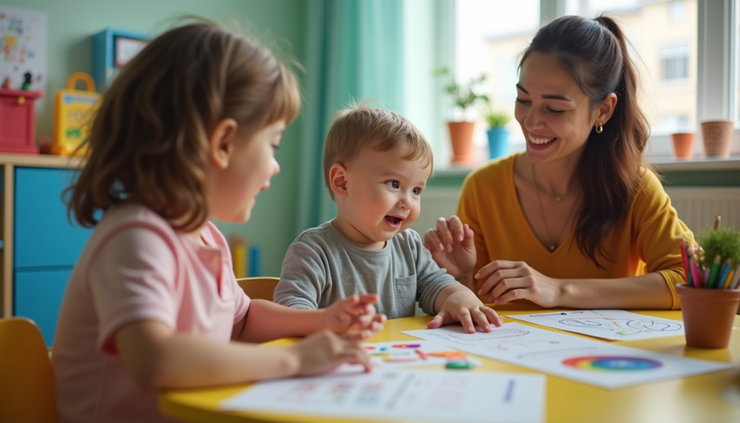
Why Generalization Matters in ABA Therapy
Children with ASD often learn new skills in highly structured settings. However, these skills can remain isolated if the child only performs them in the therapy environment. Generalization ensures that children can:
Use skills in different locations, such as home, school, or community.
Interact with various people, including family members, teachers, and peers.
Apply skills with different materials or tools.
Adapt to changes in routine or environment.
Without programming for generalization, progress made during ABA sessions may not translate into meaningful improvements in daily life. For example, a child might learn to request a toy during therapy but fail to do so at home or in a playground.
How to Program for Generalization
Generalization does not happen by chance. ABA practitioners and caregivers must intentionally design learning experiences that promote skill transfer. Here are key strategies to program for generalization effectively:
1. Vary the Teaching Environment
Introduce the skill in multiple settings. If a child is learning to greet others, practice this in the therapy room, at home, and in public places. Changing the environment helps the child understand that the skill applies everywhere, not just in one location.
2. Use Different People
Involve various individuals in teaching and practicing skills. This could include therapists, parents, siblings, and teachers. When a child learns to respond to different people, they are more likely to generalize the behavior.
3. Change Materials and Stimuli
Use a range of objects or prompts related to the skill. For example, if teaching requesting, practice with different toys, food items, or pictures. This variation prevents the child from associating the skill with only one specific item.
4. Introduce Natural Reinforcers
Reinforcers should be meaningful and naturally linked to the skill. If a child learns to ask for a snack, the reward should be the snack itself, not unrelated tokens or praise. Natural reinforcement encourages the child to use the skill spontaneously.
5. Embed Skills in Daily Routines
Incorporate learned behaviors into everyday activities. For example, practice turn-taking during family games or communication during mealtime. Embedding skills in routines helps children see their relevance.
6. Use Prompt Fading and Delays
Gradually reduce prompts and increase the time between prompts and responses. This encourages independence and helps the child respond in less structured situations.
Practical Examples of Generalization in Action
Communication Skills: A child learns to say “help” during therapy. Parents practice this at home when the child needs assistance with dressing or opening containers. Teachers encourage the child to use the word in the classroom.
Social Skills: A child practices sharing toys with a therapist. At the playground, parents prompt sharing with peers. Over time, the child shares without prompts in various social settings.
Self-Help Skills: Dressing skills taught in therapy are practiced at home with different clothing items and by different caregivers. The child learns to dress independently in multiple environments.
Supporting Generalization at Home
Parents and caregivers play a vital role in promoting generalization. Here are ways to support your child’s progress:
Communicate regularly with therapists to understand goals and strategies.
Practice skills consistently across different settings.
Celebrate small successes to motivate your child.
Be patient and flexible; generalization takes time.
Use everyday moments as teaching opportunities.
Challenges and Solutions
Generalization can be challenging because children with ASD may prefer routines and familiar settings. To overcome this:
Introduce changes gradually.
Use visual supports to prepare the child for new environments.
Collaborate with educators and other caregivers to maintain consistency.
Track progress and adjust strategies as needed.
Final Thoughts
Programming for generalization is essential for making ABA therapy effective beyond the therapy room. By varying environments, people, materials, and reinforcement, children with autism can apply their skills in meaningful ways throughout their lives. Parents and caregivers who actively participate in this process help create lasting change that supports independence and confidence.
If you are involved in ABA therapy, focus on generalization as a key goal. Work closely with your child’s therapy team and incorporate these strategies into daily life. The result will be a stronger foundation for your child’s growth and success.
Ready to take the next step?
If you're looking for compassionate, evidence-based ABA therapy in Colorado or New Mexico, Consultants for Children is here to help. Our experienced team provides personalized autism services, parent training, and behavioral support designed around your child's unique needs. Contact us today to learn how we can help your family thrive.


