Generalization in ABA: Helping Kids With ASD Use Skills Everywhere

September can make even familiar skills feel brand new.
A child who waited calmly during summer therapy may have trouble waiting in the school lunch line. A child who asks for help at home may freeze when a new teacher gives directions. A child who follows a bedtime routine may struggle with a morning classroom routine that has different words, materials, and expectations.
That does not mean the child “lost” the skill. It often means the skill has not fully generalized yet.
In ABA, generalization means a child can use a learned skill across different people, places, materials, and situations. Learning the skill is the first step. The bigger goal is helping that skill show up in real life, not only with one therapist, in one room, during one activity, or after one familiar prompt.
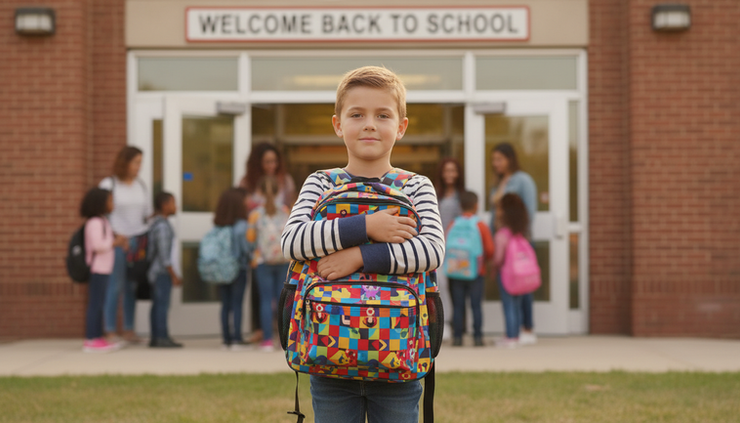
Back-to-school season gives children many natural chances to practice generalization. New teachers, classmates, schedules, classrooms, buses, cafeterias, and routines all create opportunities for skills to grow stronger and more useful.
Why generalization matters during the school year
A skill is most valuable when a child can use it when it matters.
For example, learning to ask for a break during therapy is helpful. Using that same skill during a noisy assembly, a difficult math worksheet, or a busy family dinner is even more meaningful. That is where generalization becomes a bridge between practice and daily life.
Children often learn best when adults teach skills in small, clear steps. That structure helps build success. But real life is less predictable. The words may change. The person may change. The room may change. The materials may change. A child may need to use the skill when they are tired, excited, nervous, or distracted.
A child might learn to:
Say “help please” with a parent, then later say it to a teacher.
Put toys away at home, then clean up classroom materials.
Wait for a snack at the kitchen table, then wait in line at the grocery store.
Follow “get your shoes” at home, then follow “line up at the door” at school.
Greet a sibling, then greet a classmate.
These examples may look simple from the outside. For many children, they are big steps. Each one asks the child to recognize that a familiar skill still works in a new setting.
Generalization also helps reduce frustration. When a child has a reliable way to communicate, ask for help, wait, transition, or complete a routine, the day can feel more predictable. The child has tools they can use beyond one teaching moment.
This post is informational and does not replace individualized guidance from a child’s ABA team, teacher, or healthcare provider.
What generalization can look like in everyday life
Generalization does not always look dramatic. It often shows up in small moments.
A child who once needed several reminders to hang up a backpack may walk into the classroom and hang it up after one cue. A child who practiced saying “all done” during therapy may use the same phrase at the dinner table. A child who learned to tolerate a short wait at home may wait while a librarian scans books.
These everyday moments matter because they show the skill is becoming flexible.
Generalization usually happens across four main areas.
Skills can generalize across people
A child may first learn a skill with one trusted adult. That person knows the child’s cues, preferred words, favorite reinforcers, and usual rhythm. Using the same skill with someone else can feel different.
For example, a child may follow directions from one parent but not from a grandparent. They may answer questions with an ABA therapist but not with a substitute teacher. They may ask one caregiver for a break but not another.
This is common. It does not mean the child is being difficult. It may mean they need practice using the skill with different people.
Helpful people to include can be:
Another parent or caregiver
A sibling, when appropriate
A grandparent or relative
A babysitter
A coach or activity leader
A teacher, aide, or school staff member
The goal is not to overwhelm the child with too many people at once. Start with familiar people, then slowly expand.
Skills can generalize across places
A child may use a skill well in the therapy room but not at school. Or they may follow a routine at home but not at a relative’s house.
Places come with different sounds, smells, rules, and distractions. A quiet living room feels very different from a busy cafeteria. A therapy table feels different from a classroom rug. A family car feels different from a school bus.
Good practice places often include:
Kitchen
Bedroom
Car
Backyard
Grocery store
Park
Library
Restaurant
School drop-off area
The place does not need to be special. In fact, ordinary places are often best because they match real life.

Skills can generalize across materials
Sometimes a child learns a skill with one set of materials and struggles when those materials change.
A child may match colors with therapy cards but not sort laundry by color. They may request “more” with bubbles but not with crackers. They may write their name with one pencil but resist using a marker or crayon.
Practicing with different materials helps the child understand the bigger idea behind the skill.
For example, if the skill is requesting, the child can practice asking for:
A snack
A toy
A turn
A favorite song
Help opening a container
More time on the swing
If the skill is following directions, the child can practice with:
Shoes
Backpack
Lunchbox
Books
Art supplies
Bath toys
Laundry
The more useful the materials are in daily life, the more meaningful the practice becomes.
Skills can generalize across situations
A child may use a skill when calm but struggle when tired, excited, rushed, or disappointed. This is one of the hardest forms of generalization because emotions and sensory needs can affect behavior.
For example, a child may ask for help during a quiet homework time but cry when they need help during a noisy classroom activity. They may wait for a turn during a board game at home but grab during recess.
Practice should start when the child is calm and supported. Over time, adults can help the child use the skill in more realistic moments.
The goal is not perfection. The goal is progress across different parts of the day.
How parents can support generalization at home and beyond
Parents do not need to turn the house into a therapy room. Generalization works best when practice fits into routines that already happen.
Small, steady practice gives children many chances to use skills in natural ways.
Practice with different people
If a child usually practices a skill with one parent, invite another trusted person to try. Keep the language and expectations clear.
For example, if the child is learning to request help, one parent might practice during snack time. Later, another caregiver can practice during playtime.
A simple plan might look like this:
One person teaches the skill first
Practice happens in a calm moment
Adults use similar wording
Another person practices the same skill later
Practice expands to a more natural moment
Adults slowly vary the wording
If a child uses a communication device, picture card, sign, or spoken phrase, make sure other caregivers know how to respond. Consistency helps the child trust that the skill works with more than one person.
Practice in different places
A skill should not only happen at the table, on the couch, or in the therapy room.
If the goal is waiting, practice for a few seconds in different places. Try waiting before opening the car door, waiting for a snack, waiting for a turn on the slide, or waiting while a cashier rings up items.
If the goal is following directions, practice simple directions in real settings:
“Put the cup in the sink.”
“Get your shoes.”
“Hand me the book.”
“Stand next to me.”
“Put the apples in the cart.”
Keep the first attempts short and achievable. A child who can wait for 10 seconds at home may not be ready to wait several minutes in a busy restaurant. Start where success is likely, then build from there.
Use everyday opportunities
Some of the best teaching moments happen during normal routines.
Morning routines, meals, car rides, bath time, errands, homework, and bedtime all give children chances to practice communication, independence, transitions, and social skills.
For example:
During breakfast, a child can request more cereal.
During dressing, a child can choose between two shirts.
During cleanup, a child can follow one-step directions.
During errands, a child can practice staying near the cart.
During homework, a child can ask for a break.
During bedtime, a child can complete a familiar routine.
These moments do not need to be long. Short practice, repeated often, can be more useful than one long teaching session.

Give time before helping
When a child knows a skill, it can help to pause before jumping in.
That pause gives the child a chance to respond independently. Adults often help quickly because they want to prevent frustration. That support comes from a caring place. Still, if help comes too fast every time, the child may not get a chance to try.
A brief pause can make a difference.
For example, if a child is learning to ask for help opening a snack, place the closed snack nearby and wait. Look expectant. Give a few seconds. If the child tries, respond right away. If the child does not respond, offer the least amount of help needed.
Support might move from:
Waiting quietly
Giving a gesture
Giving part of the word
Modeling the full phrase
Helping the child use a communication tool
The right amount of help depends on the child and the skill. The key is to create room for independence without letting frustration build too high.
Celebrate new use of a skill
Children benefit when adults notice progress in new situations.
Praise works best when it is specific. Instead of only saying “good job,” name what the child did.
Try phrases like:
“You asked your teacher for help, just like you practiced at home.”
“You waited while I paid for the groceries.”
“You used your words when your toy got stuck.”
“You followed the classroom direction the first time.”
“You took a deep breath before trying again.”
Specific praise helps the child connect the skill to the situation. It also tells them, “This worked here too.”
Celebration does not need to be loud or big. A smile, high five, favorite activity, or warm comment can make the moment meaningful.
Back-to-school skills that often need generalization
The start of the school year is full of change. Even children who made strong progress over the summer may need support as expectations shift.
Many common school skills need to carry over from home or therapy into the classroom.
Following directions
A child may follow directions well at home but struggle when a teacher gives group instructions. Group directions are harder because the teacher may not say the child’s name, stand nearby, or give individual prompts.
Parents can practice by giving simple directions during daily routines. Over time, vary the wording.
For example, practice:
“Put your shoes by the door.”
“Bring me your folder.”
“Throw this away.”
“Sit at the table.”
“Line up by the door.”
If the child’s school uses certain phrases, ask the teacher or ABA team what words they use. Matching some language at home can help.
Communicating needs
Children need ways to say when they need help, want a break, feel sick, feel confused, or need the bathroom.
Some children use spoken language. Some use signs, picture cards, gestures, or speech-generating devices. The form matters less than whether others understand and honor it consistently.
Communication should be practiced across people and places. A child who can ask a parent for help may need practice asking a teacher, aide, bus driver, or relative.
Waiting
School includes a lot of waiting. Children wait in line, wait for turns, wait for materials, wait for lunch, and wait for adults to answer questions.
Waiting is easier when it starts small. Practice short waits at home, then slowly increase the time or change the location.
Visual supports may help some children. A timer, countdown, first-then board, or simple phrase like “wait, then snack” can make the expectation clearer.
Transitions
Moving from one activity to another can be hard, especially when the child is leaving something preferred.
At school, transitions happen often. Children move from arrival to classwork, classwork to recess, recess to lunch, and lunch back to learning.
Parents can support this skill at home with predictable cues:
“Two more minutes, then cleanup.”
“First shoes, then car.”
“One more turn, then bath.”
“When the timer beeps, we put it away.”
Try to use the same cue more than once, then practice with small changes. This helps the child learn the skill, not just one exact routine.
Social interaction
Social skills often take time to generalize because people are unpredictable. A sibling, classmate, neighbor, and cousin may all respond differently.
Practice can include greeting, taking turns, sharing materials, asking to play, answering simple questions, or respecting personal space.
Keep practice realistic. A child who is learning to greet others may start with waving to one familiar person. Later, they may wave to a teacher or say hi to a classmate.
How to tell when a skill is becoming stronger
A skill is generalizing when it appears in more than one setting, with less help, and with more independence.
Parents may notice signs like:
The child uses the skill with a different adult.
The child uses the skill in a new place.
The child uses the skill with different materials.
The child needs fewer reminders.
The child uses the skill during a real routine.
The child uses the skill even when the wording changes.
Progress may not be even. A child might use a skill at home and school, then struggle during a field trip or family gathering. That does not erase the progress. It shows where more practice may help.
When a skill does not carry over, try to look at what changed.
Ask:
Was the place louder or busier?
Was the adult unfamiliar?
Were the materials different?
Was the child tired, hungry, or rushed?
Was the direction worded in a new way?
Did the child need a visual cue or extra time?
These questions help adults respond with support instead of frustration.
It can also help to share examples with the child’s ABA team or teacher. Clear details are useful. Instead of saying, “They are not doing it at school,” try, “They ask for help at home during homework, but they are not asking for help during writing activities at school.”
That kind of information can guide better practice.
The real goal is useful independence
Generalization in ABA is about helping children use skills where life actually happens.
A child does not only need to communicate in therapy. They need to communicate at school, at home, in the car, at the park, and with different people. A child does not only need to wait during a teaching activity. They need to wait in line, wait for a turn, and wait when plans change.
September brings many new routines, and new routines can be challenging. They can also be powerful teaching opportunities. Each new teacher, classroom, schedule, and social situation gives children another chance to learn, “I know what to do here too.”
Start small. Practice in real moments. Give time for independent responses. Celebrate when a skill shows up in a new place or with a new person.
Every new opportunity to practice helps skills become stronger, more flexible, and more meaningful. Learning continues long after therapy ends and long after the school day is over. The real success comes when children can carry their skills with them, wherever they go.